
By RIOD Engineering · June 12, 2026
Load Sharing for Office EV Chargers
The office facilities team says the building can support six chargers. The mobility team wants twenty. Both are right, in different scenarios. Load sharing bridges the gap.
Here's how a building can host chargers that would exceed its rated supply at maximum draw, while staying inside its configured electrical limits.
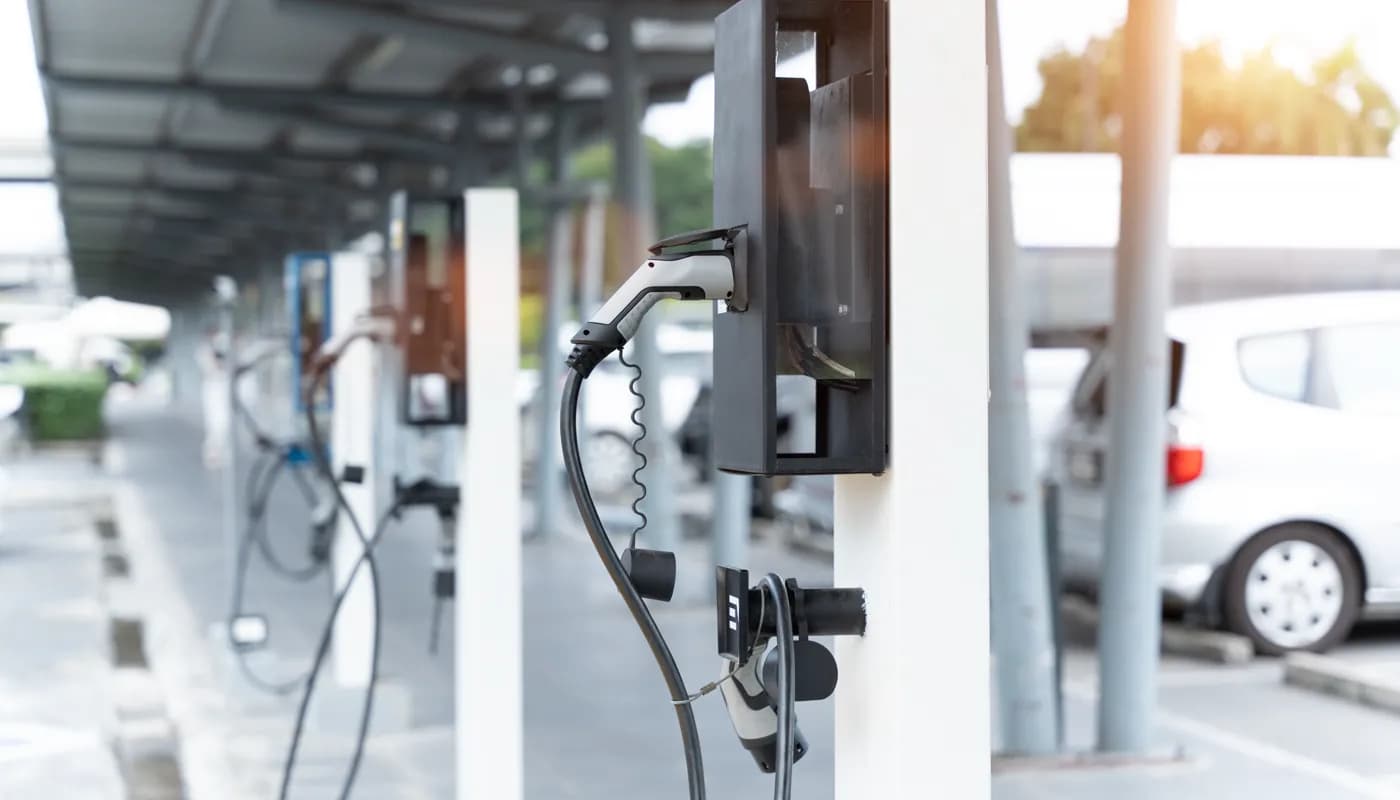
The building supply constraint
Every office building has a sanctioned electrical supply. Adding charging load means either upgrading that supply (expensive, slow, sometimes impossible) or fitting the new load within existing headroom.
Headroom is not fixed. It varies with time of day, HVAC load, occupancy. At 3pm on a hot afternoon, headroom is minimum. At 9pm with the building empty, it's maximum. A charging system that respects this actually works with the building.
Dynamic sharing across the parking floor
The platform reads the building's actual current draw (via a smart meter or BMS integration) and allocates the remaining headroom across active charging sessions. When HVAC ramps up, chargers slow. When HVAC drops off, chargers speed up.
Twenty chargers on a building sized for six draw at 30% average power each. Sometimes they run at full 7 kW; sometimes at 2 kW. Employees never notice because average charging time over 9 hours is still well below what any single vehicle needs.
Fair rotation during peak hours
When more employees want to charge than there are chargers, the queue and rotation engine takes over. Session caps during peak hours (say 3 hours or 20 kWh per session between 10am and 4pm). App-based move-your-car notifications when your session ends.
The result: everyone gets some charging, no one gets to hog a bay all day, and the building supply is never stressed.
Coordination with backup power
Many Indian offices have DG backup for grid outages. Charging on DG is expensive and hard on the generator; the platform should shed charging load first when grid drops. Two lines of code, one BMS integration, no complaint about diesel bills.
Building load example across a workday
At 9am the HVAC ramps up as employees arrive; building draw peaks and chargers throttle to match available headroom. Around noon, HVAC drops off during lunch and chargers speed back up. Around 3pm HVAC peaks again on the hot side of the afternoon; chargers throttle again. By 6pm the office empties, HVAC drops, and any remaining chargers pull full rated power until they finish. The scheduler tracks this continuously without a facilities-team member touching anything.
Fair-use policy
- Per-session time or energy caps during peak hours
- Queueing when chargers are all busy
- Move-your-car notifications when the session ends
- Priority for low-SoC users who need it most
Read Our Next Article
Employee EV Charging Access: App, RFID and BLE
Depot Charging Load Management: More Chargers Than Your Sanctioned Load Should Allow
Workplace EV Charging Billing and Reimbursement
Payment Migration for EV Charging Networks: What Gets Missed

The Zero-Downtime CMS Migration Playbook
OCPP Profile Drift: Why “OCPP-Compatible” Isn’t Enough for CMS Migration
Deploying EV charging?
Talk to our team about your project. We design, supply, and manage EV charging infrastructure across India.