
Workplace EV Charging Software for CPOs and Installers
Workplace charging software that turns limited office chargers into a fair-share amenity: which employees can charge, for how long, who pays, and how bays rotate through the workday.
The workplace problem
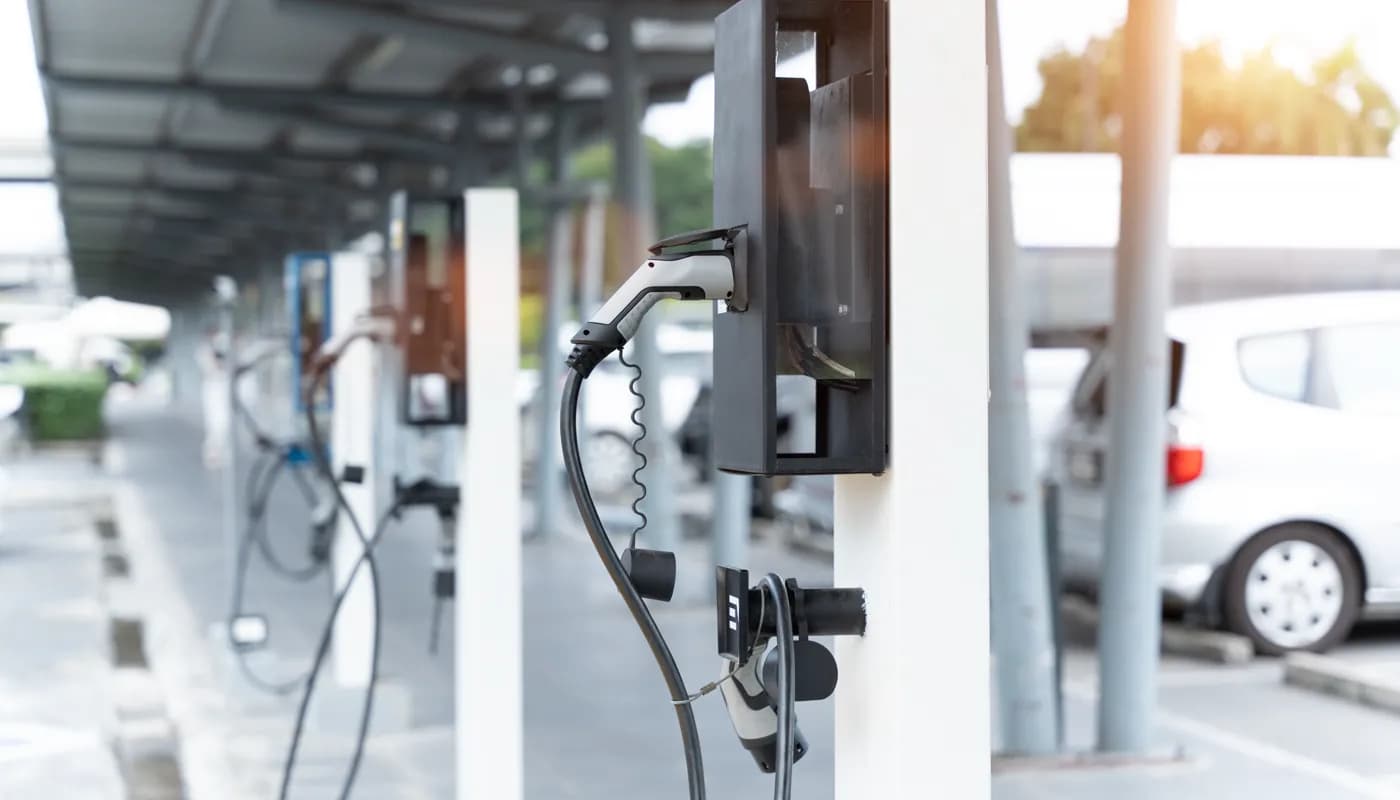
Eight chargers, forty EV-driving employees, cars parked for nine hours. The facilities team ends up on WhatsApp arbitrating who plugged in when, and the finance team keeps asking how to bill it. Past six chargers, workplace charging becomes a policy and access-control problem. The hardware side stays simple; the software side carries the load.
Why public driver apps fall short here
A generic public charging app authenticates any driver with UPI, starts a session, and moves on. That model breaks for workplace charging on three fronts. Access has to be restricted to employees, not any passing driver on the network. Bays have to rotate fairly across dozens of employees on a shared pool of chargers, instead of running first-come-first-served for hours at a time. Billing has to land in payroll or corporate expense systems, not settle per-session on the driver's UPI account.
Public driver apps were never scoped to solve any of this. Workplace scenarios need dedicated software, which is why CPOs and installers who take workplace charging seriously build (or commission) their own platform for it.
Modules built to spec
Every workplace has different rules. We build to yours, drawing from a library of proven modules:
- Employee app: book a slot, join the queue, receive move-your-car alerts
- Access control: mobile app, RFID card or BLE proximity (basement-proof)
- Fair-use engine: rotation rules, time or energy caps in peak hours
- Load sharing across chargers on limited building supply
- Policy engine for free / at-cost / subsidized / paid charging
- Payroll and HRMS export in the format your finance team wants
- Facility dashboard: utilization, revenue, per-employee history
Charging policy options
A perk for employees (free), energy at cost (payroll-deducted), slab-based subsidy (first N kWh free, then paid), or paid guest charging for visitors. Different policies for different departments if HR wants it. The engine handles the accounting; you set the rules once.
Basement reality: BLE offline auth
Most Indian office parking is basement or stilt, where cellular signal is zero and cloud-dependent charging apps go dark. Bluetooth-based authorization lets the driver's phone and the charger talk directly over BLE. Access rules and session records sync automatically the moment the phone climbs back up to signal. The basement is a solved deployment, first-class supported.
Works with your existing chargers
Any OCPP-compliant charger integrates. Deploy the workplace app on top of your installed base, or bundle with RIOD PowerPod AC chargers for a single-vendor stack. If you're rolling out chargers for the first time, we can supply hardware, software and installation as one turnkey engagement.
Engineering notes behind Workplace Charging.
Questions we get most.
How do employees pay for workplace charging?
However your policy defines it. The platform supports free charging as a perk, energy-at-cost billed via payroll deduction, UPI payment per session, or slab-based subsidies. Billing exports to payroll and HRMS systems.
How is charger access shared fairly among employees?
A queue and rotation engine. Employees book or join a queue in the app, sessions have time or energy caps during peak hours, and the app notifies drivers when to move their car. Utilization data helps facilities decide when to add chargers.
Does it work in basement parking with no mobile network?
Yes. RIOD builds BLE-based authorization so the charger and the employee's phone talk directly over Bluetooth, with transactions synced when connectivity returns. No network in the basement is a solved problem.
Can it run on our existing chargers?
If they are OCPP compliant, yes. We can also supply RIOD PowerPod AC chargers with the workplace application as a bundled deployment.
Twenty EVs, eight chargers, one platform.
Tell us about the site. Let's get on a call.
Plan your rollout