
By RIOD Engineering · July 13, 2026
UPI vs RFID vs App: Charging Payment Methods Compared
Payment friction decides utilization at public charging sites. A charger where the driver has to install an app, sign up, verify email, add a card and only then start charging will sit idle while the driver drives to a nearby competitor with a QR code.
This is the honest comparison of the three main payment methods for Indian EV charging.
Comparison table
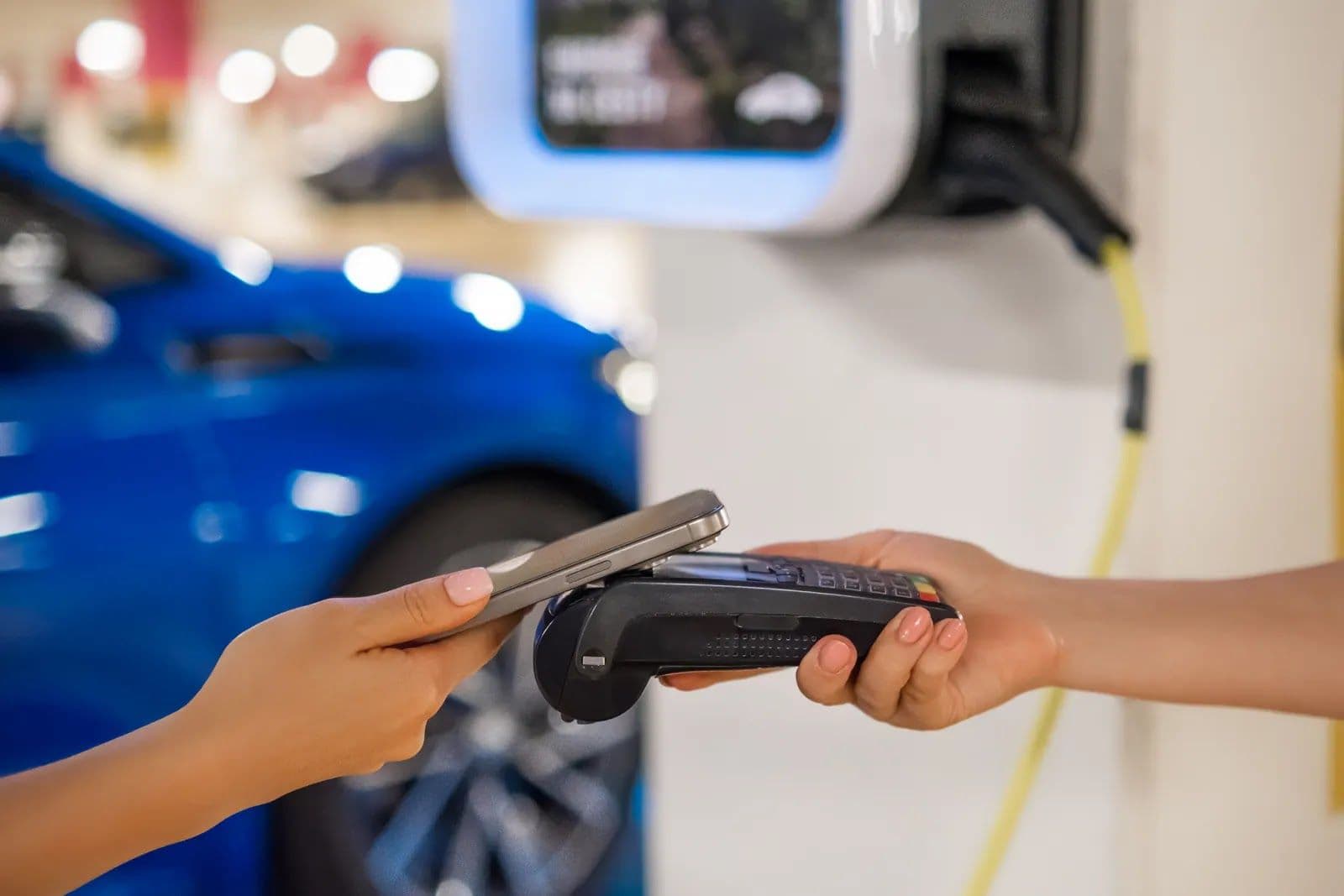
UPI QR: friction zero (app already installed), fraud low (transaction-authenticated), offline capable when the driver has signal even if the charger doesn't. Best for public sites where every visitor is potentially first-time.
RFID card: near-zero friction for regulars who already have a card (tap to charge), but high friction for first-time public drivers who typically arrive without one. Highest hardware reliability of the three. Best for closed-loop deployments where cards can be provisioned in advance: fleets, workplaces, apartment residents.
Operator app: friction highest for new drivers (install, sign up), lowest for regulars (they're already registered), richest driver experience (history, favorites, notifications). Best for high-frequency drivers on the same network.
The utilization data
Public sites with UPI QR available typically show higher utilization than app-only sites. First-time-driver conversion at UPI sites is materially higher than at app-only sites, where a large share of first-timers give up at the app sign-up step.
Regulars don't care about payment method; they use whatever's fastest for them. First-timers decide whether your site sees a session or the driver leaves. UPI removes that decision.
The right answer is usually a mix
Public site: UPI QR as the main path, operator app for regulars. RFID optional for corporate account holders.
Fleet depot: RFID as the main path (drivers charge multiple times per day, tap is faster than QR). App for exception cases.
Workplace: RFID + app for employees. UPI for guests.
Apartment: BLE for residents (basement scenario). Static or dynamic QR for occasional guest chargers.
Decision framework
How much of your driver base is one-time vs regular? What's the site's connectivity story? Do drivers pay individually or does a fleet cover them? Are there compliance requirements (AFIR contactless card in the EU, for example)?
Match the payment method to the answers. A hybrid site with two payment paths beats a single-path site every time.
Comparison matrix
| Method | Best for |
|---|---|
| UPI QR | Public sites where every visitor is potentially first-time |
| RFID | Closed-loop regular users (fleet, workplace, apartment) |
| App | Loyalty, session history, and advanced UX for return customers |
| BLE | Offline or basement deployments where cellular is not reliable |
Recommended mix by site type
- Public site: UPI QR as the main path, operator app for regulars
- Fleet depot: RFID as the main path, admin dashboard for exception handling
- Workplace: RFID or app for employees, UPI QR for occasional guests
- Apartment: BLE or RFID for residents (basement scenario), billing backend for the RWA
Read Our Next Article
Dynamic QR Code Payments for EV Charging
UPI Autopay for EV Charging Subscriptions
Payment Migration for EV Charging Networks: What Gets Missed
The Zero-Downtime CMS Migration Playbook
OCPP Profile Drift: Why “OCPP-Compatible” Isn’t Enough for CMS Migration
Enel X Way Shutdown: The Migration Checklist for CPO Fleets
Deploying EV charging?
Talk to our team about your project. We design, supply, and manage EV charging infrastructure across India.