
By RIOD Engineering · December 8, 2025
What is Dynamic Load Management for EV Charging
Dynamic Load Management (DLM) adjusts EV charging power in real time based on total site electricity consumption. It is the technology that lets you install more chargers than your electrical capacity would normally allow, because not all chargers need full power simultaneously.
The Problem DLM Solves
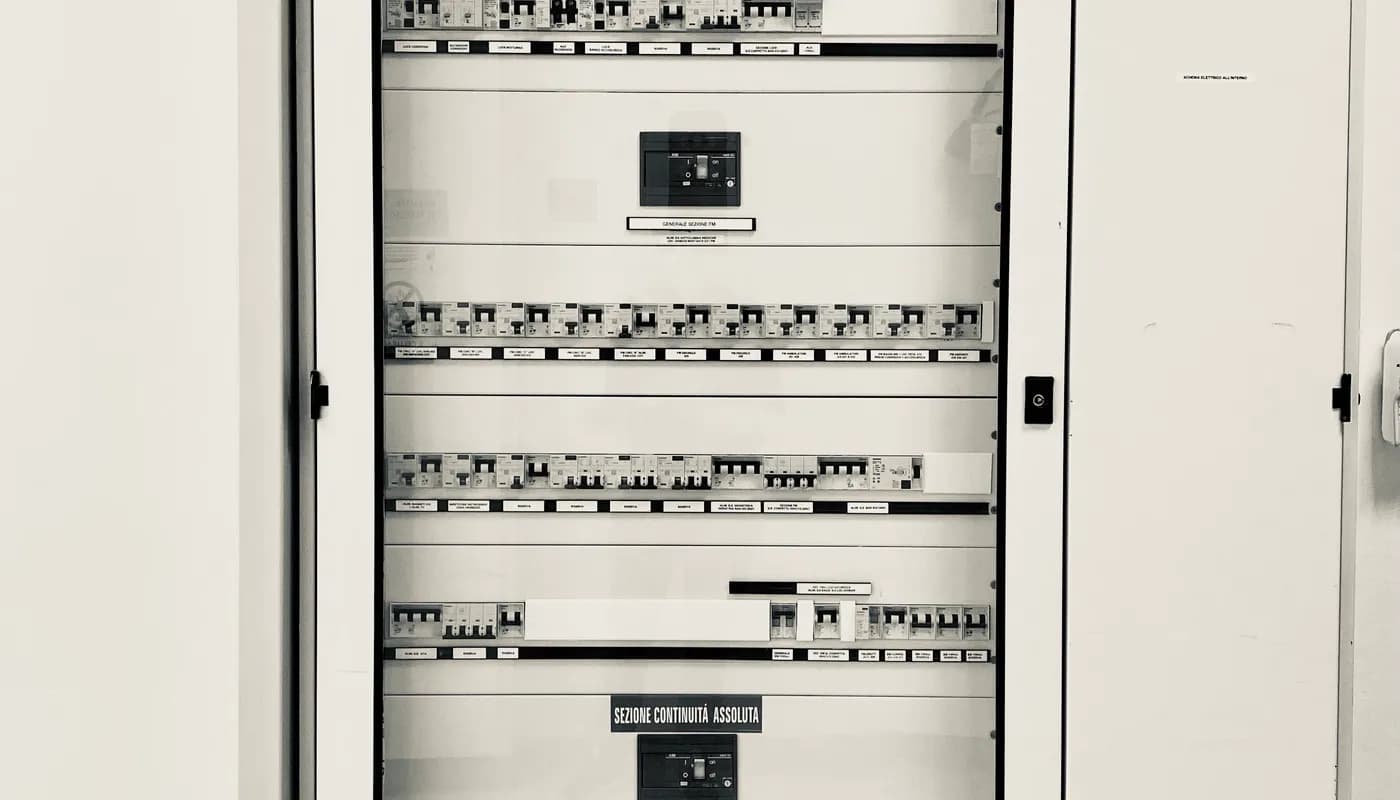
Consider a building with 100 kW of available capacity and existing loads that consume 70 kW during peak hours. Without DLM, you can only install 30 kW of EV charging, maybe four 7.4 kW chargers. With DLM, you can install ten chargers because the system ensures total EV charging draw never exceeds the available headroom, dynamically adjusting as building loads fluctuate.
During off-peak hours when the building uses only 40 kW, the chargers can ramp up to use the remaining 60 kW. During peak hours, they throttle down to 30 kW or less. More chargers serve more vehicles without any electrical infrastructure upgrade.
How DLM Differs from Static Load Balancing
Static load balancing divides a fixed allocation among chargers. DLM goes further by monitoring the entire site's consumption and adjusting the EV charging allocation in real time. The EV charging budget is not fixed; it is whatever capacity remains after all other loads are served.
- Static: Fixed power limit per charger, does not adapt to building load changes
- Dynamic: Real-time adaptation based on CT clamp measurements at the main incomer
- Static: Simpler to implement, no additional hardware beyond the chargers
- Dynamic: Requires current measurement hardware and a DLM controller or smart charger with built-in DLM
Priority and Fairness Algorithms
Not all charging sessions are equal. A delivery van that needs to be fully charged by 6 AM should get priority over an employee's car that has until 5 PM. DLM systems let operators set priority rules based on user groups, vehicle type, or scheduled departure time.
Fairness algorithms ensure that no single charger monopolizes available power. If power is limited, each active charger gets at least the minimum viable charging current (6A per phase, about 1.4 kW single-phase). Below this threshold, charging pauses rather than running inefficiently.
Implementation with RIOD
RIOD's DLM system uses CT clamps at the site incomer and communicates with chargers via OCPP. The central controller reads grid import, solar production (if available), and battery state. It then computes optimal power distribution across all connected chargers every 5 seconds.
Setup requires minimal additional hardware: CT clamps and a DLM controller or gateway. For sites with RIOD chargers that have built-in DLM capability, the CT clamps connect directly to the master charger, eliminating the need for a separate controller.
Read Our Next Article
Optimizing Charging Infrastructure for Utilities
How to Detect Faulty EV Chargers
Resettable RCDs in EV Chargers: What You Need to Know
The Rise of V2G Technology in India
Home Energy Management Systems and Their Role in EV Charging
The Future of Two-Way Energy Communication
Deploying EV charging?
Talk to our team about your project. We design, supply, and manage EV charging infrastructure across India.