
By RIOD Engineering · February 5, 2026
Why Charging in Theaters and Public Parking Works
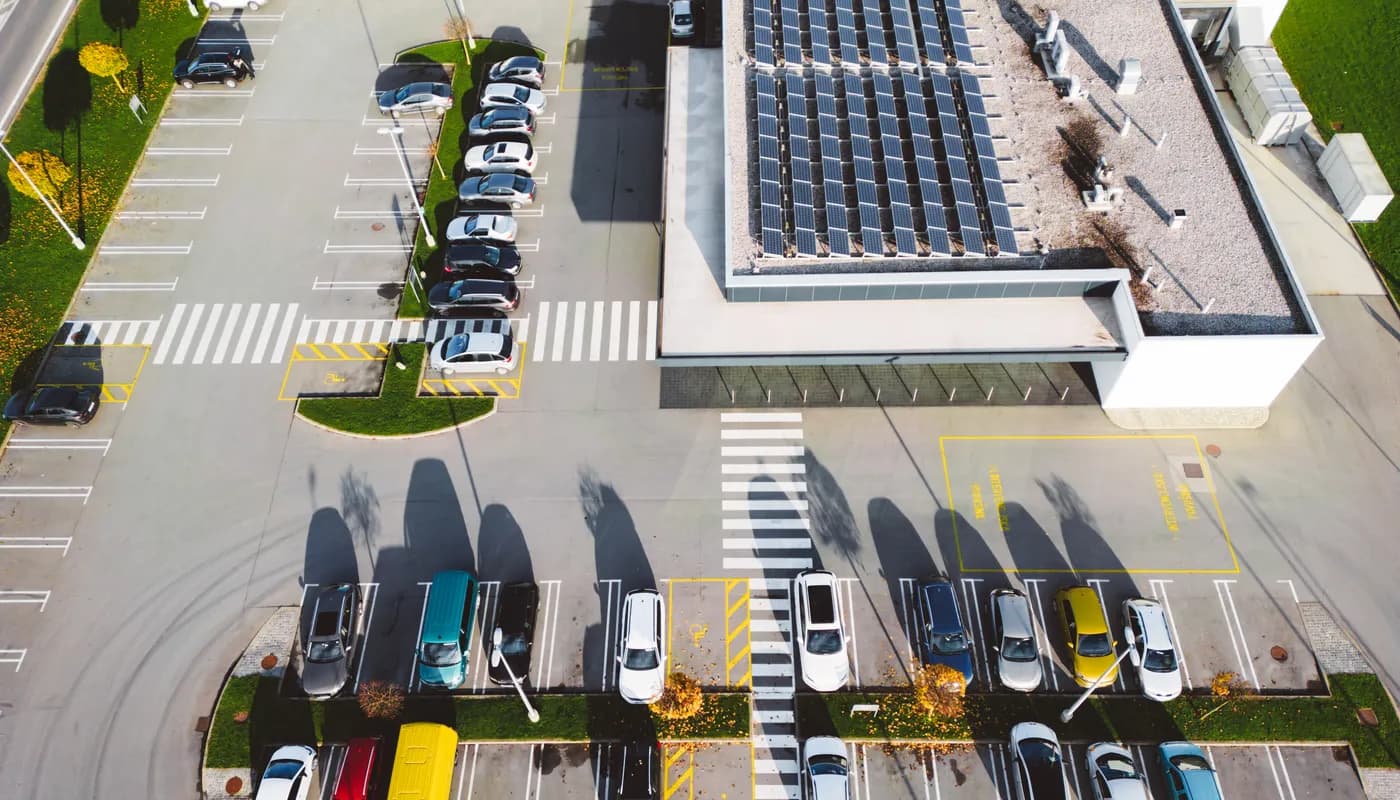
Movie theaters, malls, and public parking lots share one trait that makes them perfect for EV charging: predictable dwell time. A moviegoer parks for two to three hours. A shopper parks for one to two. That window lines up neatly with AC charging speeds, turning idle parking bays into revenue-generating assets without any behavior change from the driver.
Dwell Time Matches Charge Time
A 7.4 kW AC charger adds roughly 30-40 km of range per hour. In two hours at a theater, that is 60-80 km of range, more than enough for most daily commutes. The driver does not have to wait, watch a progress bar, or rearrange their schedule. They park, plug in, watch a film, and leave with a charged car.
This is fundamentally different from highway fast charging where the driver waits specifically for the charge. At a theater or mall, charging is a background activity. That distinction matters because it means lower-cost AC chargers can do the job. You do not need expensive 60 kW DC units when the car is sitting there for hours anyway.
The Revenue Model for Parking Operators
Parking operators already monetize space by the hour. Adding EV chargers creates a second revenue stream on the same square footage. The math works well: a 7.4 kW charger delivering power at a modest markup over commercial electricity rates generates meaningful income per bay per day, especially in high-traffic locations.
- Revenue from energy sales on top of existing parking fees
- Higher footfall as EV drivers preferentially choose venues with charging
- Premium parking pricing for charger-equipped bays
- Advertising and brand partnership opportunities at charging stations
Payment Integration and User Experience
Modern OCPP-compliant chargers integrate with mobile apps, UPI, RFID cards, and even parking management systems. A driver can start a session from their phone while walking into the theater. Billing is automatic. No attendant is needed. Some operators bundle charging costs into parking tickets for a seamless experience.
For the parking operator, this means minimal operational overhead. The charger management platform handles session tracking, billing, energy reporting, and fault alerts remotely.
CPO Benefits and Scaling
Charge point operators partnering with theater chains and parking lot owners get access to prime locations with built-in foot traffic. The site already has electrical infrastructure, security, and lighting. Installation costs are lower compared to greenfield highway stations.
RIOD works with CPOs to deploy AC charging solutions tailored for these high-dwell-time environments. Our OCPP-compliant chargers, combined with a robust backend platform, give operators full visibility into utilization, revenue, and charger health across multiple sites.
Read Our Next Article
Improving Charger Utilization for CPOs
Preventing Parking Misuse at Charging Stations
Extending the Life of EV Charging Stations
Operations Best Practices for Charge Point Operators

Reducing Installation Cost of EV Charging Stations
Home EV Charging: What Works Best
Deploying EV charging?
Talk to our team about your project. We design, supply, and manage EV charging infrastructure across India.