
By RIOD Engineering · March 10, 2026
Home EV Charging: What Works Best
Most EV charging happens at home. It is the most convenient and cheapest way to keep your car topped up. But the range of home charger options can be confusing. Do you need 3.3 kW or 22 kW? Single phase or three phase? Plug-and-play or hardwired? The right answer depends on your car, your electrical setup, and how you drive.
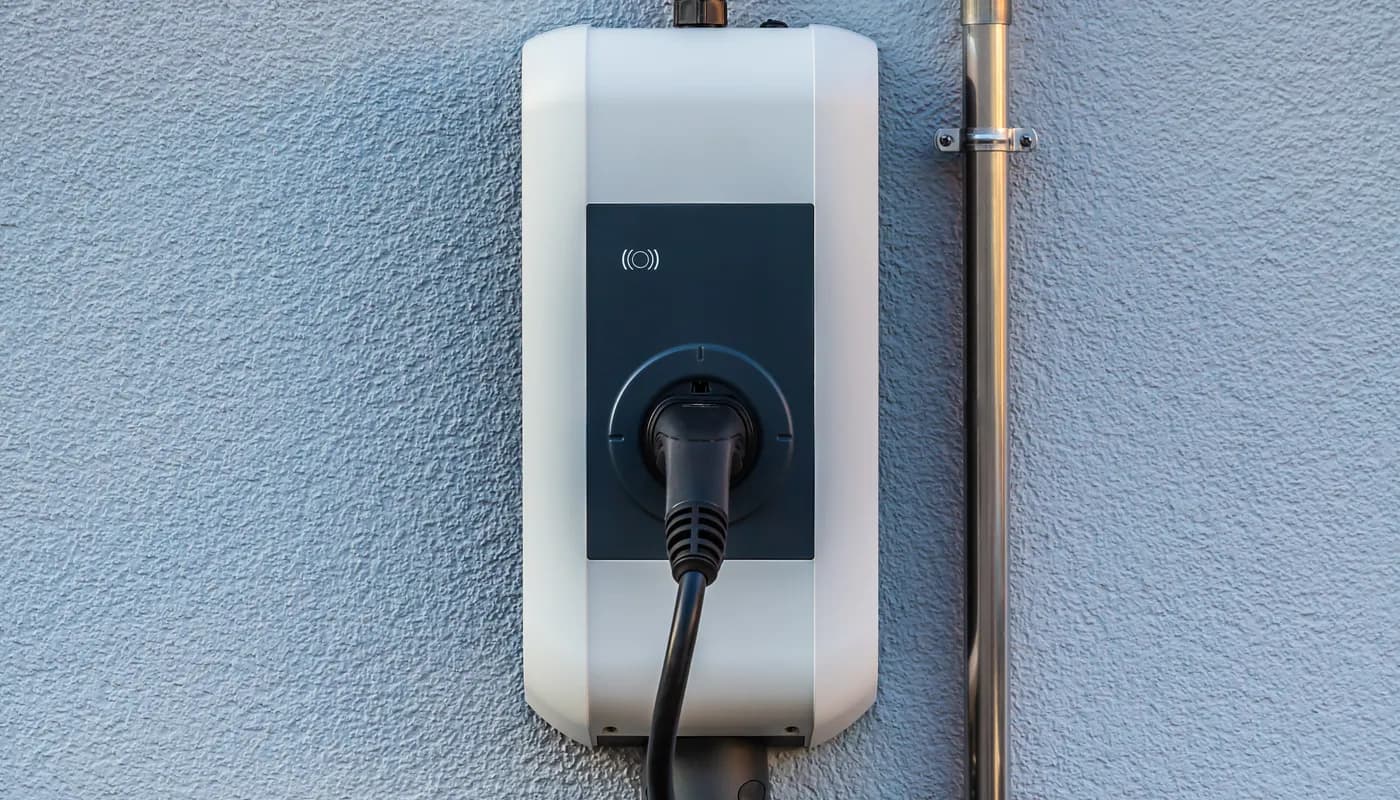
3.3 kW vs 7.4 kW vs 22 kW
A 3.3 kW charger runs on a standard 15A single-phase socket. It adds about 15-18 km of range per hour. For someone driving 30-40 km daily, plugging in overnight gives a full charge easily. It is the cheapest option and requires zero electrical upgrades in most homes.
A 7.4 kW charger needs a dedicated 32A single-phase circuit. It roughly doubles the charging speed, adding 30-40 km per hour. This is the sweet spot for most home users. It handles longer daily commutes and can fully charge larger battery EVs overnight without stress.
A 22 kW charger requires a three-phase connection, which many Indian homes do not have. It charges three times faster than 7.4 kW, but most cars sold in India have onboard chargers capped at 7.4 kW or 11 kW. Paying for 22 kW capability that your car cannot use is wasted money. Check your vehicle's onboard charger rating before buying.
Single Phase vs Three Phase
Most Indian homes have single-phase power. That limits you to 7.4 kW maximum for AC charging. If you have a three-phase connection, you can go up to 22 kW, but again, your car's onboard charger is the real bottleneck. Three-phase connections also cost more if you need to upgrade from single phase.
For the majority of home users, single-phase charging at 7.4 kW is perfectly adequate. You charge overnight, wake up with a full battery, and never think about range anxiety.
Plug-and-Play vs Hardwired
Plug-and-play chargers connect to an existing socket. They are portable, easy to install, and work as a starter solution. The downside is that standard sockets are not designed for sustained high-current loads. Running a 3.3 kW charger for 8 hours nightly on a regular socket can cause overheating if the wiring is old or the socket is low quality.
Hardwired chargers are permanently installed with a dedicated circuit from your distribution board. They are safer, more reliable, and support higher power levels. For a 7.4 kW charger, hardwired installation is the recommended approach. The installation cost is modest and the safety improvement is significant.
Overnight Charging and Battery Health
Slow overnight charging is better for battery longevity than fast charging. Lower charging rates generate less heat, which is the main enemy of battery health. Most EVs let you set a charge limit (80-90%) and a charging schedule. Set your home charger to start at off-peak hours when electricity is cheapest and stop at 80% for daily use. Charge to 100% only before long trips.
RIOD offers home AC chargers at 3.3 kW and 7.4 kW with smart scheduling, energy metering, and app-based controls. Both options are designed for Indian electrical standards and come with built-in safety protections.
Read Our Next Article
Improving Charger Utilization for CPOs
Preventing Parking Misuse at Charging Stations
Extending the Life of EV Charging Stations
Operations Best Practices for Charge Point Operators
Reducing Installation Cost of EV Charging Stations
EV Charger Specifications That Actually Matter for Buyers
Deploying EV charging?
Talk to our team about your project. We design, supply, and manage EV charging infrastructure across India.