
By RIOD Engineering · February 20, 2026
Which EV Charger is Best for Apartment Societies
Apartment societies face a unique set of constraints when choosing EV chargers. The RWA has to balance cost, fairness in billing, electrical capacity, and the varying needs of residents who drive different EVs. Picking the wrong charger or the wrong deployment model leads to disputes, wasted money, and infrastructure that does not scale. Here is what actually works.
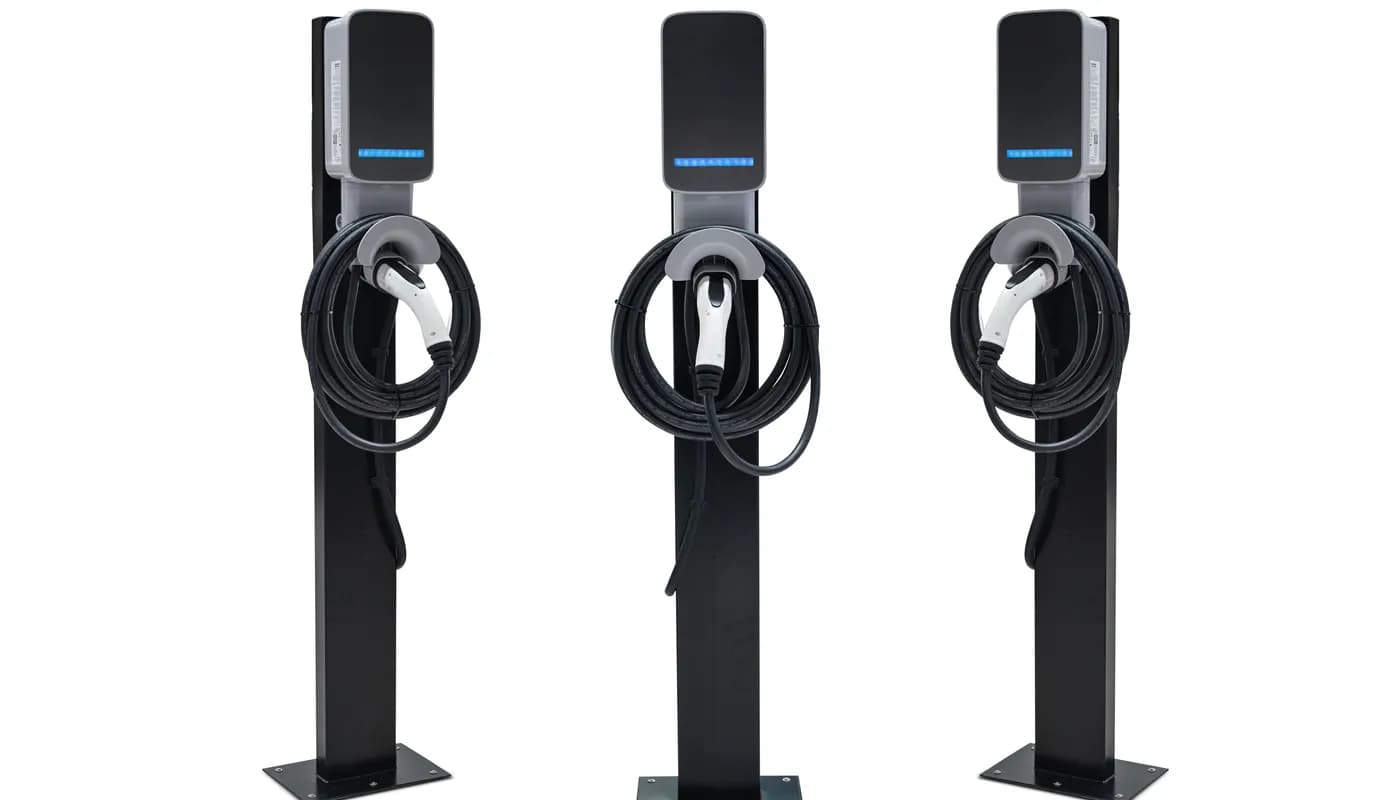
What RWAs Should Prioritize
The charger itself is only one piece. RWAs need to think about the whole system: metering, billing, load management, and future expansion. A cheap charger that cannot meter individual usage creates billing nightmares. A premium charger without load management can trip the building's main breaker. The right choice balances all four.
- Individual metering so each resident pays for what they use
- Load management to prevent overloading building electrical supply
- OCPP compliance for interoperability and future-proofing
- Remote monitoring to reduce the need for on-site maintenance visits
Comparing Charger Options
For apartment use, AC chargers rated at 3.3 kW or 7.4 kW cover the vast majority of needs. A 3.3 kW unit is the most affordable and works well for residents who drive under 50 km daily. A 7.4 kW unit charges faster and suits drivers with longer commutes or larger battery EVs. Going above 7.4 kW for individual apartment bays rarely makes sense because the electrical load adds up fast across multiple units.
Some societies opt for a shared DC charger in visitor or common parking. This works as a supplement but should never be the primary charging solution for residents.
Billing and Load Management
Billing is where apartment charging gets political. If charging costs are lumped into common area electricity, residents without EVs subsidize those who have them. That breeds resentment. The solution is individual metering tied to each charger, with costs billed directly to the EV owner.
Load management is equally critical. Without it, a building with 20 chargers starting simultaneously at 8 PM will exceed its electrical capacity. Smart load management staggers charging sessions, throttles power during peak demand, and ensures the building never exceeds its sanctioned load.
RIOD Community Charging Platform
RIOD's community charging solution is built specifically for apartment societies. It combines smart AC chargers with a backend platform that handles per-unit metering, automated billing, dynamic load management, and remote diagnostics. RWAs get a dashboard showing usage across all chargers. Residents get an app to start sessions and track their costs. The system scales from a handful of chargers to hundreds without requiring changes to the building's main electrical infrastructure.
Read Our Next Article
Improving Charger Utilization for CPOs
Preventing Parking Misuse at Charging Stations
Extending the Life of EV Charging Stations
Operations Best Practices for Charge Point Operators

Reducing Installation Cost of EV Charging Stations
Home EV Charging: What Works Best
Deploying EV charging?
Talk to our team about your project. We design, supply, and manage EV charging infrastructure across India.