
By RIOD Engineering · June 19, 2026
IEC 61851 and ISO 15118 Firmware Compliance
IEC 61851 is the standard defining the physical charging interface: connector types, control pilot signaling, safety states. ISO 15118 is the next layer up: EV-to-charger digital communication for authentication (Plug and Charge) and bidirectional power (V2G).
Certification against both is a well-scoped process. Firmware bugs make it a very unscoped process. Here's what actually gets tested and how to pass the first time.
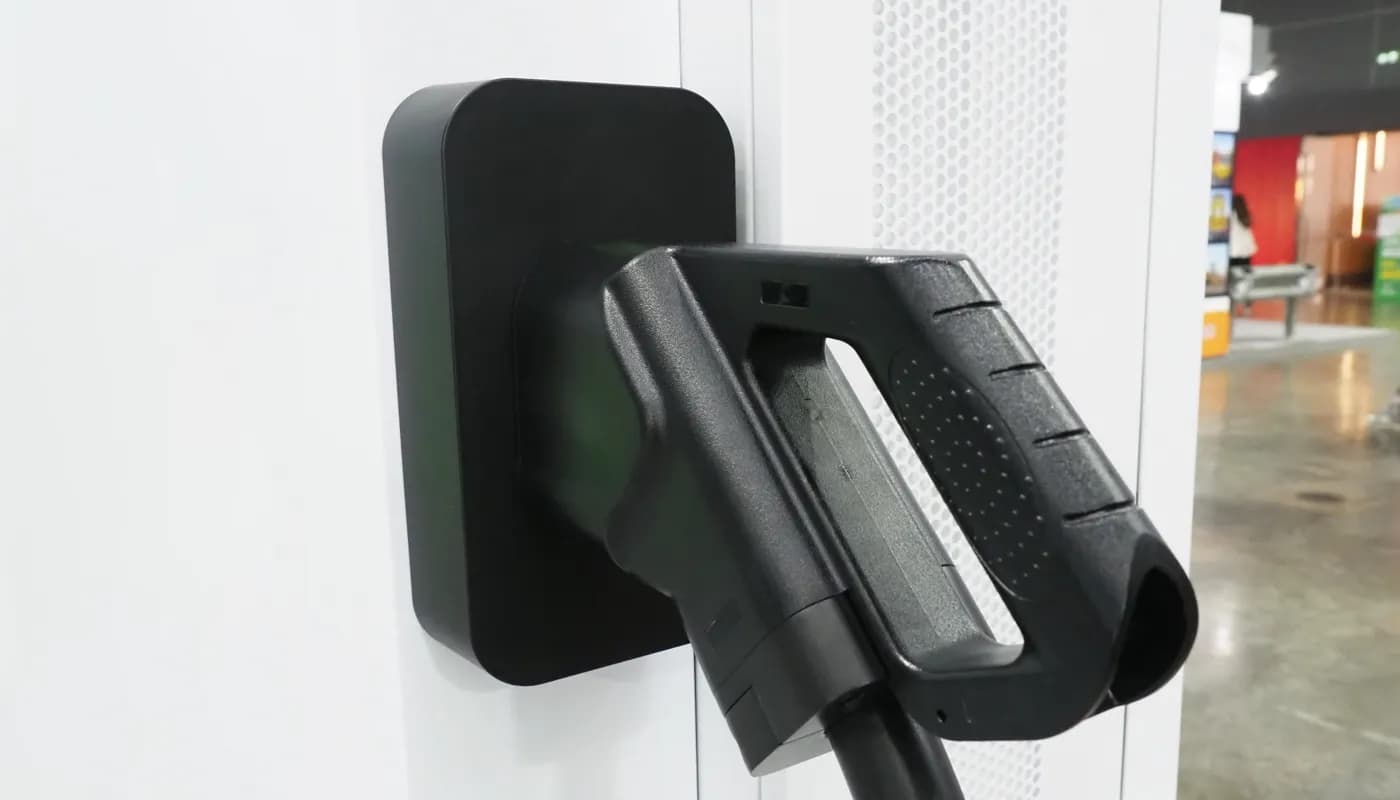
IEC 61851-1 essentials
Six control-pilot states A-F. A: nothing connected. B: cable connected, EV not ready. C: charging (12V amplitude, PWM). D: charging with ventilation (for some vehicles). E: short to protective earth. F: fault.
Correct state transitions and correct PWM duty cycle per current limit are the two things certification labs verify. Bugs are usually in the PWM math (off by 0.1% duty is a real current mismatch), or in the transitions (State B to C can fail spuriously if the CP driver has ground bounce).
Common certification failures
Wrong PWM duty for current signalling. For duty cycles between 10% and 85%, the relationship is duty% = current_A / 0.6 (so 32A maps to ~53% duty). Above 85% duty (up to about 96%), the formula changes to duty% = (current_A + 64) / 2.5 for high-power chargers. Getting the boundary wrong, or applying one formula across the whole range, is a common firmware bug and a common certification finding.
Missing State F on real faults. The CP is supposed to go to State F when the charger detects a safety condition. Firmware that doesn't drive the CP low on RCD trip, over-temperature or comms loss fails compliance.
PP resistor readings ignored. The proximity pilot signals cable current rating. Firmware that draws more than the PP allows is a hazard and fails compliance.
ISO 15118 readiness
Even AC chargers can support 15118 for Plug and Charge. The hardware needs a PLC modem for the EV-to-charger comms; the firmware needs the 15118-2 or 15118-20 message stack.
For firmware-only readiness (hardware not yet PLC-capable), the state machine and API surface can be designed to slot in the 15118 stack later. This lets you ship a charger that upgrades to PnC via firmware when the hardware roadmap supports it.
Working with test labs
Book the lab session in advance and pre-check with a portable EV simulator. Send the firmware version and expected test outcomes ahead. Have an engineer on-site or on-call during the tests so findings can be fixed and re-tested the same day.
Certification takes days when everything works. It takes weeks when firmware bugs surface at the accredited lab and require a round trip. Pre-compliance testing before the formal slot is the difference.
Compliance checklist for type testing
- CP state transitions A through F verified with an EV simulator
- PP resistor reading and current derating validated across cable ratings
- RCD response timing tested against IEC 62955 limits
- Connector lock actuation verified under fault and normal cases
- PWM duty cycle accuracy measured across the full current range
- Fault state entry verified for over-current, over-voltage and thermal events
- Emergency stop path tested from every triggering source
ISO 15118 readiness
- PLC modem on the CP line, or hardware roadmap that adds it
- V2G TLS with certificate handling on the charger side
- Contract certificate flow from CMS through charger to EV
- Backend Plug and Charge support with a trusted PKI root
- Firmware architecture that leaves 15118-2 and 15118-20 upgradable in place
Read Our Next Article
OCPP Firmware Stack for AC and DC Chargers
Secure OTA Architecture for EV Chargers

BLE User Management for EV Chargers
Payment Migration for EV Charging Networks: What Gets Missed

The Zero-Downtime CMS Migration Playbook
OCPP Profile Drift: Why “OCPP-Compatible” Isn’t Enough for CMS Migration
Deploying EV charging?
Talk to our team about your project. We design, supply, and manage EV charging infrastructure across India.