
By RIOD Engineering · March 5, 2026
Wireless EV Charging: Where We Are and What's Next
Wireless EV charging eliminates the cable entirely. You park over a pad, and the car charges. The technology uses inductive power transfer, the same principle that charges your phone on a wireless pad, but scaled up to handle kilowatts instead of watts.
It sounds convenient, and it is. But efficiency losses, cost, alignment challenges, and standardization gaps have kept it from going mainstream. Here is an honest look at where things stand.
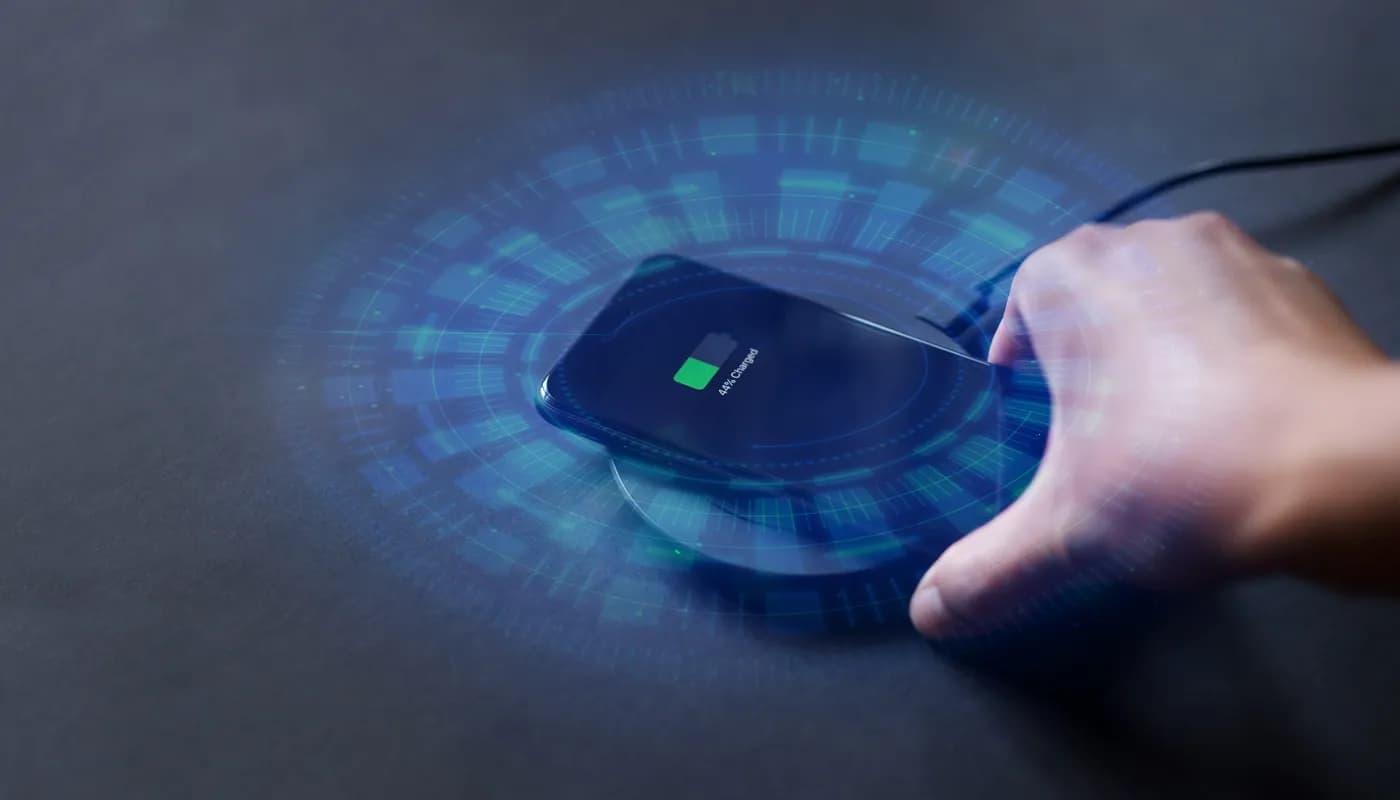
How Inductive Charging Works
A ground-mounted transmitter coil generates an alternating magnetic field. A receiver coil mounted under the vehicle picks up this field and converts it back to electrical energy, which charges the battery. The air gap between the coils is typically 15 to 25 centimeters.
The frequency used for EV wireless charging is standardized at 85 kHz under SAE J2954. Power levels currently range from 3.7 kW (WPT1) up to 11 kW (WPT3), with plans for higher power levels in future revisions.
SAE J2954: The Standard That Matters
SAE J2954 defines interoperability requirements for wireless charging systems. It specifies operating frequency, power classes, alignment tolerances, and safety requirements including foreign object detection and living object protection.
- WPT1: 3.7 kW for overnight home charging
- WPT2: 7.7 kW for faster residential or workplace charging
- WPT3: 11 kW for semi-fast charging applications
- WPT4 (planned): 22 kW and above for commercial fleet use
Efficiency: The Honest Numbers
Wired AC charging operates at roughly 90-92% efficiency from wall to battery. Wireless charging currently achieves 85-90% efficiency under ideal alignment conditions. Misalignment of even 10 centimeters can drop efficiency by 5-10 percentage points.
This means wireless charging wastes more energy per session. For occasional home use, the difference is negligible on your electricity bill. For high-utilization fleet applications, it adds up and matters financially.
Current Limitations
Cost is the biggest barrier. A wireless charging system costs three to five times more than an equivalent wired charger. Ground pad installation requires civil work, and the vehicle-side receiver adds cost and weight to the car.
- Vehicle ground clearance variations affect efficiency across different car models
- Foreign object detection systems must reliably identify metal debris, animals, or other objects between the coils
- Retrofitting existing vehicles is impractical; wireless charging needs to be designed into the car from the start
Where Wireless Charging Makes Sense Today
Autonomous vehicles are the strongest use case. A self-driving car cannot plug itself in. Wireless charging at taxi stands, bus depots, and autonomous vehicle hubs eliminates this problem entirely. Several pilot programs with autonomous shuttle buses use wireless charging at stops, topping up the battery during passenger boarding.
Fleet operations with fixed parking positions, like delivery vans that park in the same depot spot every night, are another good fit. The alignment is consistent, utilization is high, and eliminating cable handling saves time.
Timeline for Mass Adoption
Wireless charging will not replace wired charging. It will complement it. Expect factory-integrated wireless charging options from premium OEMs by 2027-2028. Mainstream adoption at lower price points is more likely in the 2030-2032 timeframe, driven by autonomous vehicle demand and manufacturing scale.
For the Indian market specifically, wired charging infrastructure is still the priority. Wireless charging will follow once the basics of public and residential wired charging are well established.
Read Our Next Article
Improving Charger Utilization for CPOs
Preventing Parking Misuse at Charging Stations
Extending the Life of EV Charging Stations
Operations Best Practices for Charge Point Operators
Reducing Installation Cost of EV Charging Stations
Home EV Charging: What Works Best
Deploying EV charging?
Talk to our team about your project. We design, supply, and manage EV charging infrastructure across India.