
By RIOD Engineering · September 5, 2025
Networked vs Non-Networked EV Chargers: A Practical Comparison
A dumb charger delivers power to your EV. A smart charger does that plus everything else: scheduling, monitoring, remote control, load management, and integration with energy systems. The price gap between them has narrowed significantly. Here is what each option gives you and when each makes sense.
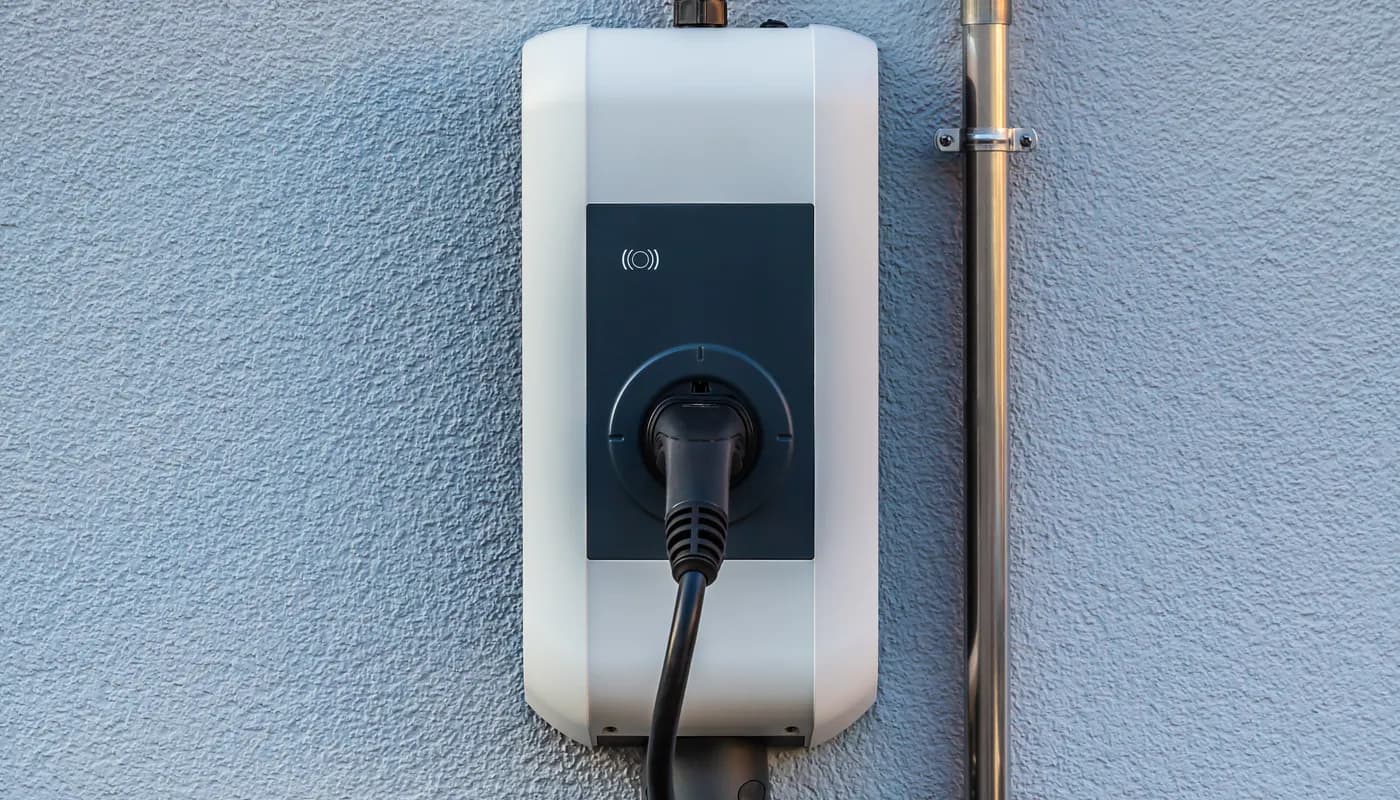
What a Basic (Dumb) Charger Does
A basic charger converts your wall outlet or hardwired connection into a safe EV charging point. It includes the required safety circuits (RCD, overcurrent protection), a charging cable, and a connector. You plug in the car, and it charges at a fixed rate until the battery is full. No app, no scheduling, no data.
This is fine if you have a simple setup: one car, one charger, flat-rate electricity, and no interest in tracking consumption.
What a Smart Charger Adds
Smart chargers connect to Wi-Fi, cellular networks, or Ethernet. They communicate with a backend system using OCPP and give you control through a mobile app or web dashboard.
- Scheduled charging to take advantage of off-peak electricity rates
- Real-time energy consumption monitoring and historical data
- Remote start/stop and power adjustment
- RFID or app-based user authentication for shared setups
- Load management integration to prevent electrical overloads
- OTA (over-the-air) firmware updates for new features and security patches
The Cost Calculation
A basic charger might cost Rs 25,000-40,000. A smart charger from a reputable manufacturer costs Rs 50,000-1,50,000. The premium buys you scheduling and monitoring capabilities that can save Rs 500-1,500 per month on electricity through off-peak charging alone. Over 3-5 years, the smart charger often pays for itself.
For multi-charger setups in apartments or workplaces, smart chargers are not optional. You need load management and user-level billing, which only smart chargers provide.
Future-Proofing
Smart chargers receive firmware updates that add new features after purchase. As grid tariff structures evolve, new smart charging algorithms can optimize your costs without hardware replacement. Dumb chargers are frozen in time. What you buy is what you get, forever.
If you plan to add solar panels, a home battery, or a second EV in the future, a smart charger will integrate with those systems. A dumb charger will not.
Read Our Next Article
Improving Charger Utilization for CPOs
Preventing Parking Misuse at Charging Stations
Extending the Life of EV Charging Stations
Operations Best Practices for Charge Point Operators

Reducing Installation Cost of EV Charging Stations
Home EV Charging: What Works Best
Deploying EV charging?
Talk to our team about your project. We design, supply, and manage EV charging infrastructure across India.