
By RIOD Engineering · November 25, 2025
RFID vs App-Based EV Charger Authentication
Every shared or public EV charger needs a way to identify who is charging. The two main methods are RFID cards and mobile apps. Each has trade-offs in convenience, cost, and reliability. The right choice depends on your use case.
How RFID Authentication Works
RFID (Radio-Frequency Identification) uses a physical card or key fob that you tap on the charger's reader. The charger sends the card's unique ID to the central system via OCPP, which checks authorization and starts the session. The whole process takes 1-2 seconds.
RFID cards are simple, reliable, and work without a phone or internet connection on the user's side. The charger only needs its own network connection to verify the card.
How App-Based Authentication Works
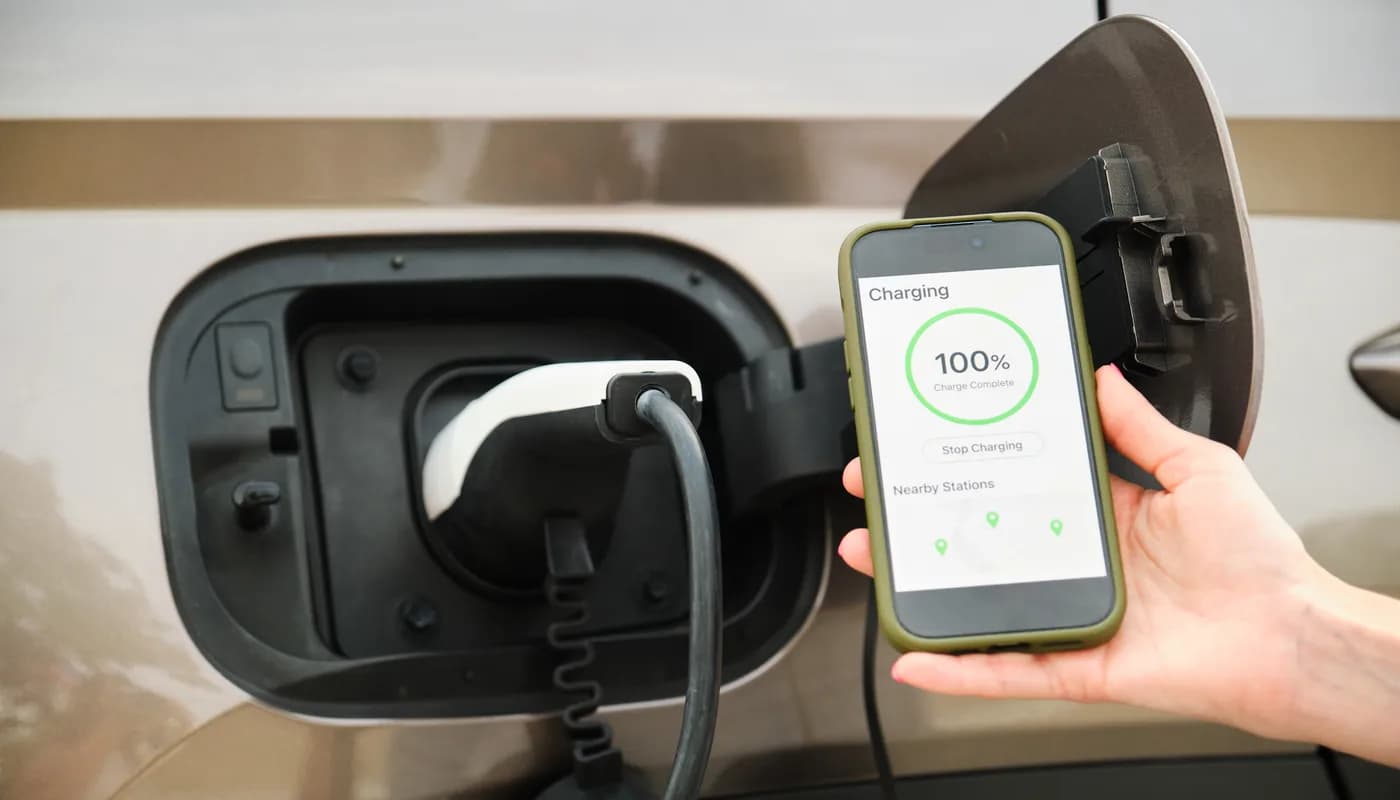
App-based authentication uses a smartphone app to start and stop charging sessions. The user opens the app, selects the charger (often by scanning a QR code), and taps start. The app communicates with the back-end server, which sends a remote start command to the charger via OCPP.
- No physical card to carry or lose
- App can show charger availability, pricing, and session history
- Payment integration through UPI, cards, or wallet
- Requires a working smartphone with internet connection
Comparing the Two
RFID wins on reliability. It works in areas with poor mobile connectivity, does not require a charged phone, and is intuitive for non-tech-savvy users. Apps win on features. You get real-time monitoring, remote start/stop, payment processing, and detailed usage history.
- RFID: Lower per-user cost (Rs 50-200 per card), no app download needed
- App: No physical token to distribute, richer user experience
- RFID: Works offline at the user's end, only charger needs connectivity
- App: Dependent on user's phone and mobile data connection
The Best Approach: Both
Most well-designed charging networks support both methods. RFID serves as the reliable fallback when phones are dead or connectivity is spotty. The app provides the premium experience for users who want detailed control and monitoring. RIOD chargers support both RFID and app-based authentication through OCPP, letting operators choose the mix that suits their users.
For workplace or apartment charging, RFID cards linked to employee or resident IDs are the most practical primary method, with app-based access as a secondary option.
Read Our Next Article

Optimizing Charging Infrastructure for Utilities
How to Detect Faulty EV Chargers
Resettable RCDs in EV Chargers: What You Need to Know
The Rise of V2G Technology in India
Home Energy Management Systems and Their Role in EV Charging

The Future of Two-Way Energy Communication
Deploying EV charging?
Talk to our team about your project. We design, supply, and manage EV charging infrastructure across India.