
By RIOD Engineering · February 28, 2026
EV Charging Solutions for Parking Lots
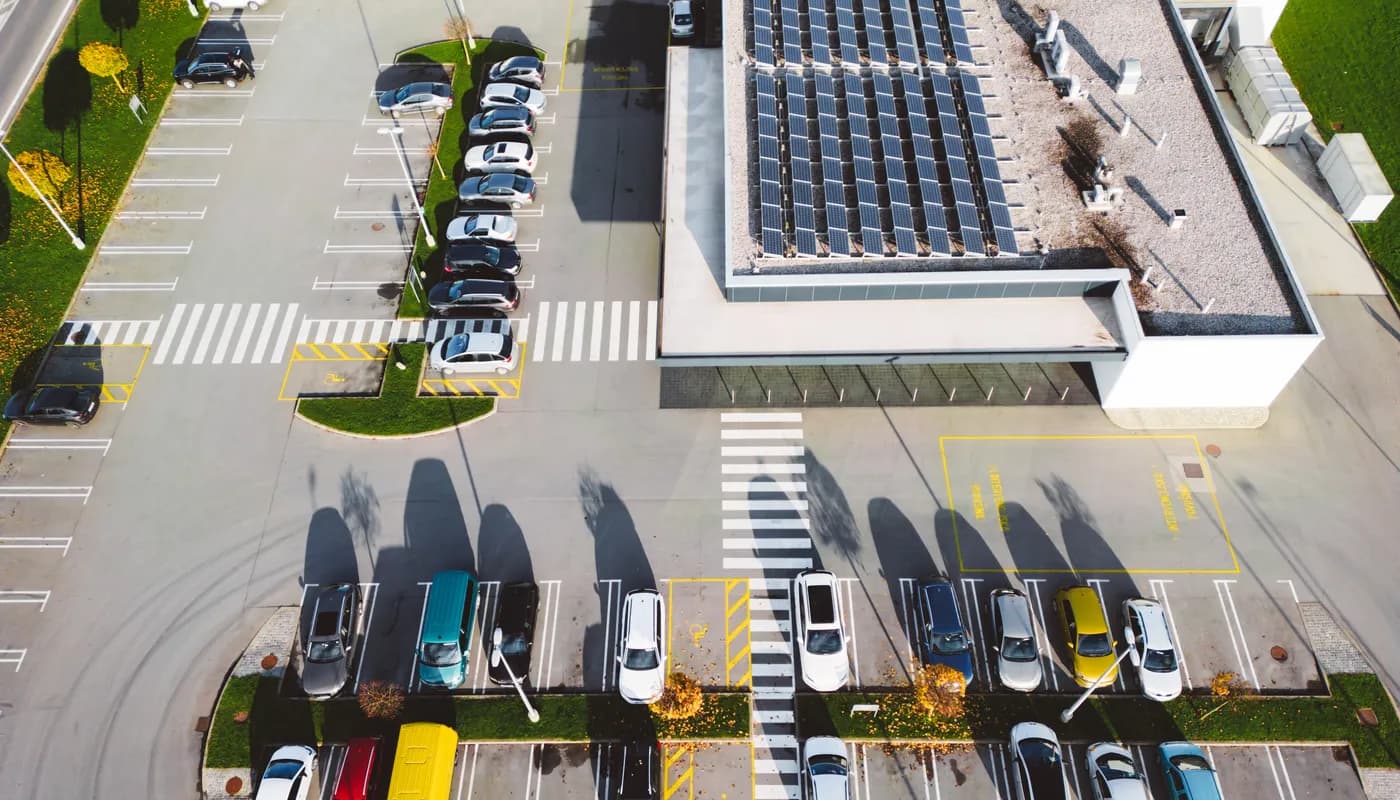
Parking lots at malls, airports, metro stations, and commercial buildings are prime real estate for EV charging. They have existing electrical infrastructure, security, lighting, and a steady stream of vehicles with predictable dwell times. The question is not whether to install chargers but how to design a deployment that maximizes revenue and utilization while keeping costs under control.
Matching Charger Type to Location
Different parking lots need different charging mixes. A mall parking lot where cars sit for 1-3 hours benefits from a combination of AC chargers for leisurely shoppers and a few DC fast chargers for quick top-ups. Airport long-term parking is ideal for AC-only setups because cars sit for days. Metro station parking works best with AC chargers since commuters leave their cars for 8-10 hours.
- Mall parking: Mix of 7.4 kW AC and 30 kW DC chargers
- Airport long-term: 7.4 kW AC chargers (cars parked 24+ hours)
- Metro stations: 3.3-7.4 kW AC chargers (8-10 hour dwell time)
- Commercial buildings: 7.4-22 kW AC chargers for employee vehicles
Revenue Models That Work
Parking lot operators can monetize EV charging in several ways. The simplest is a per-kWh energy fee with a markup over commercial electricity rates. Some operators add a time-based occupancy fee to discourage vehicles from hogging charger bays after charging completes. Others bundle charging into premium parking packages.
The revenue math improves with utilization. A charger used for 8 sessions per day generates significantly more than one used for 2 sessions. Location selection, pricing strategy, and visibility all drive utilization.
OCPP Backend and Operations
Running chargers across multiple parking sites requires a centralized management system. OCPP (Open Charge Point Protocol) is the industry standard that lets operators manage chargers from different manufacturers through a single backend. It handles session management, billing, firmware updates, and fault reporting remotely.
Without OCPP, you are locked into one manufacturer's ecosystem. With it, you can mix and match hardware based on site requirements while keeping a unified operational view. RIOD chargers are fully OCPP 1.6J compliant and work with all major backend platforms.
Planning for Scale
Start with a pilot of 4-8 chargers in the highest-traffic zone of the parking lot. Measure utilization for 3-6 months. Use that data to plan phase two. Pre-run conduit and cabling to expansion bays during the initial installation because trenching and cable routing are the most expensive parts of installation. Paying a little extra upfront to future-proof the infrastructure saves significantly when scaling up.
Read Our Next Article
Improving Charger Utilization for CPOs
Preventing Parking Misuse at Charging Stations
Extending the Life of EV Charging Stations

Operations Best Practices for Charge Point Operators

Reducing Installation Cost of EV Charging Stations
Home EV Charging: What Works Best
Deploying EV charging?
Talk to our team about your project. We design, supply, and manage EV charging infrastructure across India.