
By RIOD Engineering · June 15, 2025
How EV Charging Works: AC vs DC Explained
Every EV charger falls into one of two categories: AC or DC. The difference is not just speed. It affects cost, installation requirements, use cases, and how the electricity actually gets into your battery. Understanding this distinction is the foundation for making any EV charging decision.
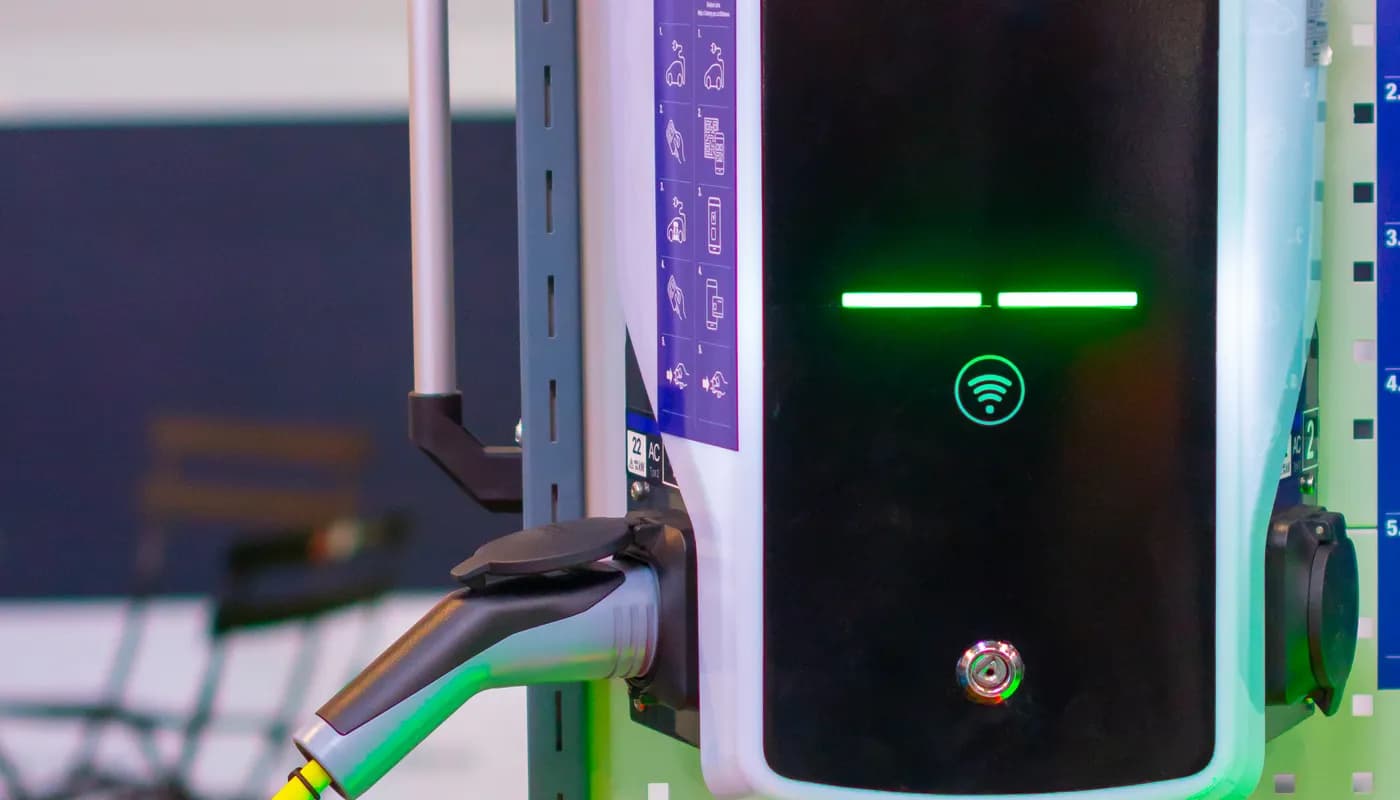
The Basics: AC and DC Power
The electricity grid supplies AC (Alternating Current). EV batteries store energy as DC (Direct Current). Every charging session requires a conversion from AC to DC. The question is where that conversion happens.
With AC charging, the onboard charger inside the vehicle handles the conversion. With DC charging, a large external converter does the work and feeds DC directly to the battery, bypassing the onboard charger entirely.
AC Charging: Slow but Simple
AC chargers deliver power at 3.3 kW (single-phase) to 22 kW (three-phase). The onboard charger in most EVs can handle 7.4 kW to 11 kW. Charging a 40 kWh battery from 20% to 80% takes roughly 4-6 hours at 7.4 kW.
- Lower hardware cost (Rs 30,000 to Rs 1,50,000 depending on features)
- Standard electrical installation, no special grid connection needed for single-phase
- Ideal for overnight home charging and workplace charging
- Minimal battery stress due to lower charging rates
DC Fast Charging: Speed at a Cost
DC chargers start at 25 kW and go up to 350 kW. They can charge an EV from 20% to 80% in 20-45 minutes depending on the power level and vehicle capability. The conversion hardware is built into the charger itself, which is why DC chargers are physically large and expensive.
- Hardware costs range from Rs 8,00,000 to Rs 30,00,000+
- Requires dedicated high-power electrical connections
- Essential for highway corridors and public fast-charging networks
- Higher charging rates generate more heat and can accelerate battery wear if used exclusively
Which One Do You Need?
For home and workplace charging, AC is the right choice. You plug in when you arrive, and the car is full when you leave. The lower cost and simpler installation make it practical for daily use. DC charging is for transit scenarios: highway stops, public charging hubs, and fleet operations where vehicles cannot afford long dwell times.
Most EV owners will use AC charging for 80-90% of their charging needs and DC fast charging only during road trips or emergencies.
Read Our Next Article
Improving Charger Utilization for CPOs
Preventing Parking Misuse at Charging Stations
Extending the Life of EV Charging Stations
Operations Best Practices for Charge Point Operators

Reducing Installation Cost of EV Charging Stations
Home EV Charging: What Works Best
Deploying EV charging?
Talk to our team about your project. We design, supply, and manage EV charging infrastructure across India.