
By RIOD Engineering · December 20, 2025
DC Fast Charging: Hardware Design Deep Dive
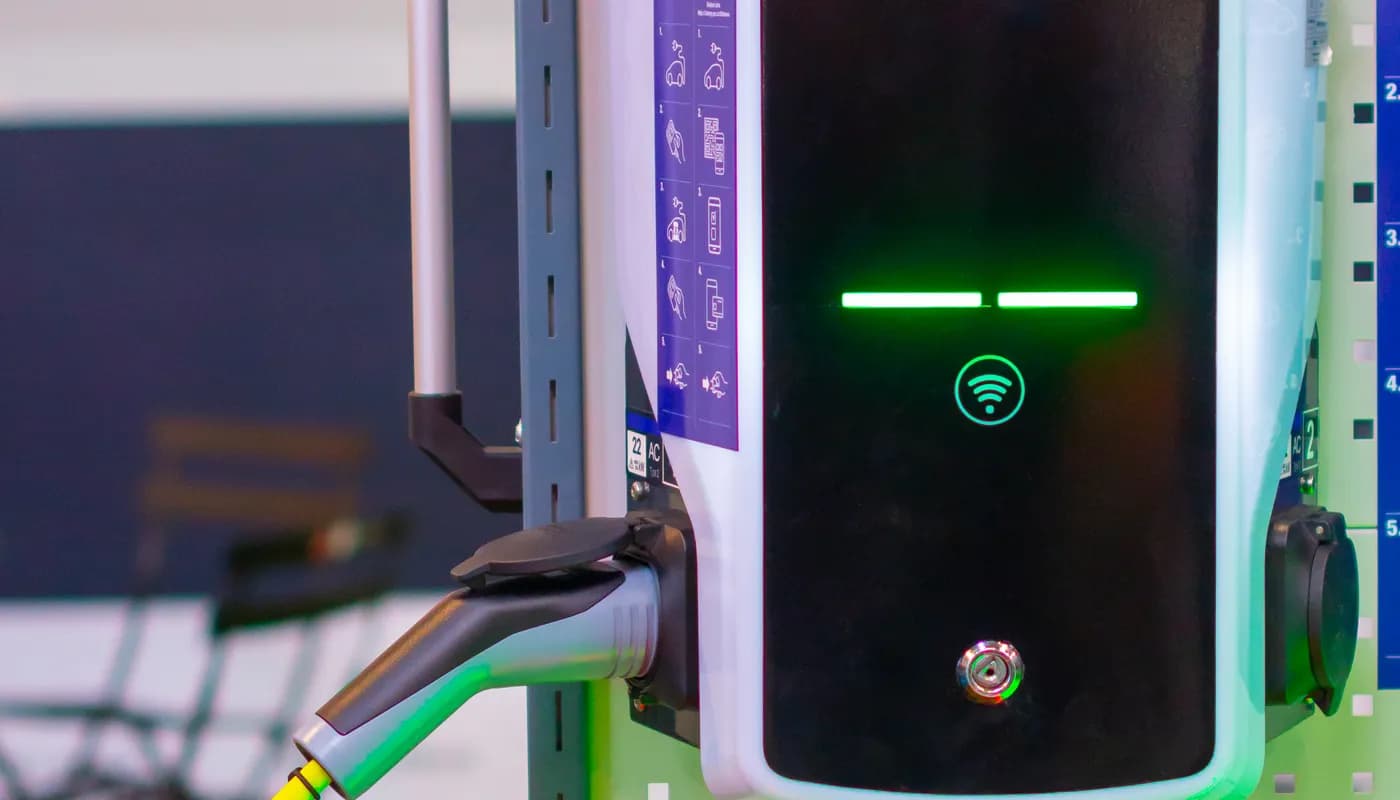
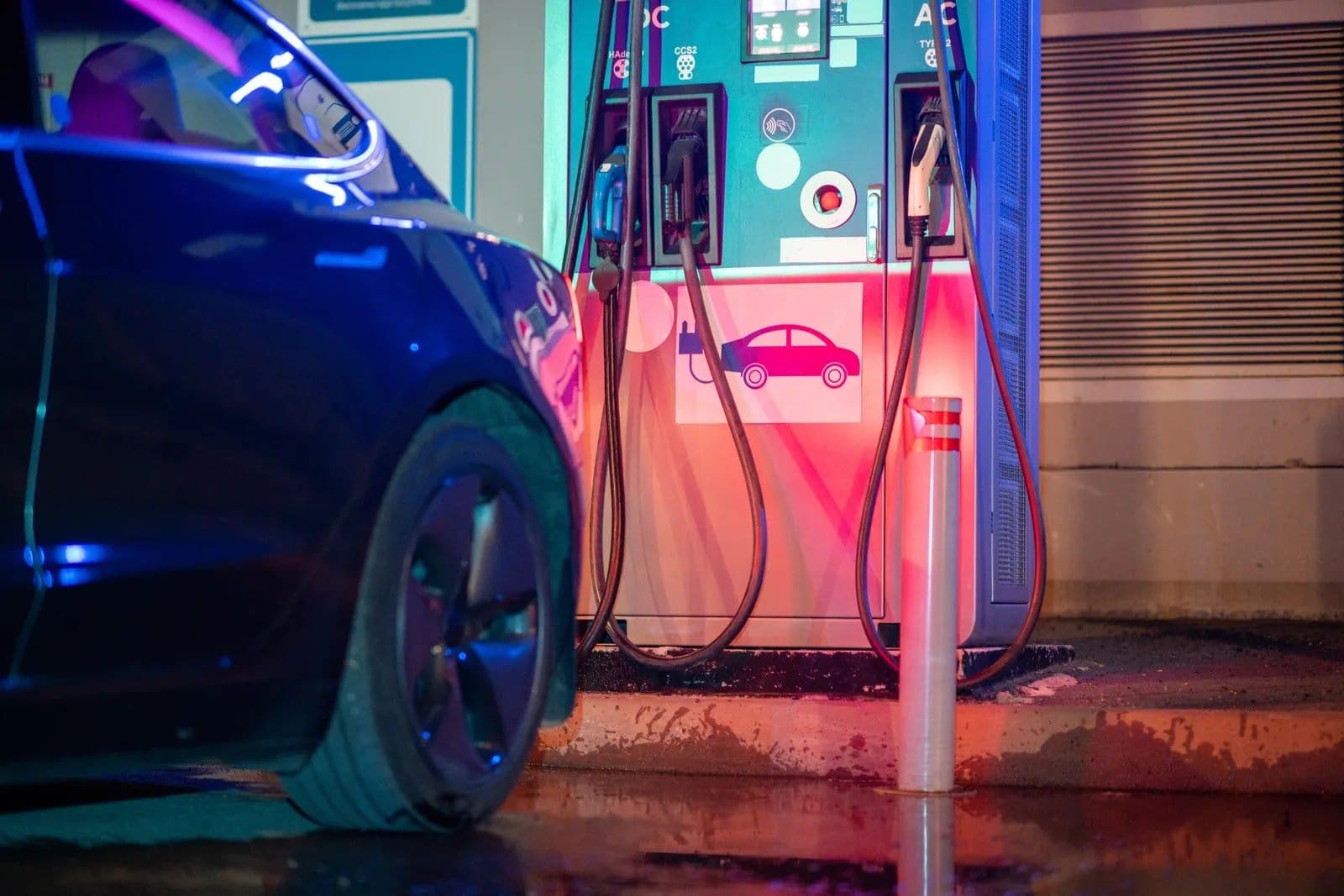
DC fast chargers are the most technically complex pieces of EV charging hardware. Unlike AC chargers that rely on the vehicle's onboard converter, DC chargers perform the AC-to-DC conversion externally and push high-power DC directly into the battery, requiring precision power electronics, thermal management, and robust safety systems.
Power Electronics Architecture
A DC fast charger typically consists of an AC input stage (rectification and power factor correction), an isolated DC-DC converter stage, and an output stage with voltage and current regulation. Modern designs use silicon carbide (SiC) MOSFETs in the converter stage for higher efficiency and reduced heat generation at high switching frequencies.
The power factor correction (PFC) stage ensures the charger draws clean power from the grid, a critical requirement for high-power installations where harmonic distortion can affect neighbouring equipment and violate grid codes.
Thermal Management Challenges
At 30-150 kW power levels, even 95% efficiency means 1.5-7.5 kW of heat dissipation. In Indian ambient temperatures exceeding 45°C, thermal management becomes a critical design challenge. Liquid cooling for power modules and forced-air cooling for enclosures are standard in high-power designs.
RIOD's DC charger designs use computational fluid dynamics (CFD) simulations to optimize airflow paths and heat sink geometries, ensuring reliable operation even in extreme Indian summer conditions.
Safety and Compliance
DC fast chargers must comply with IEC 61851-23 for DC charging, IEC 61851-1 for general safety, and various national standards. Ground fault detection, insulation monitoring, emergency shutdown, and overcurrent protection are non-negotiable safety features.
The communication between charger and vehicle follows the CCS (Combined Charging System) or CHAdeMO protocol, where the vehicle's battery management system dictates the maximum voltage and current the charger can deliver at any moment.
Read Our Next Article
Payment Migration for EV Charging Networks: What Gets Missed
The Zero-Downtime CMS Migration Playbook
OCPP Profile Drift: Why “OCPP-Compatible” Isn’t Enough for CMS Migration
Enel X Way Shutdown: The Migration Checklist for CPO Fleets
UPI vs RFID vs App: Charging Payment Methods Compared
UPI Autopay for EV Charging Subscriptions
Deploying EV charging?
Talk to our team about your project. We design, supply, and manage EV charging infrastructure across India.